Making Money
I've only just heard about Modern Money Theory

Here’s a quote from a highly respectable energy and climate research group I came across recently.
“2025 looks set to be a pivotal year in the fight against climate change, securing energy stability, and fostering sustainable economic growth.”
That sounds eminently sensible and, dare I say it, even slightly optimistic. It actually cheered me up for a bit.
I agree that whatever happens this coming year, it’s going to be entertaining. There are going to be ‘breaking news’ events that will actually be pivotal. Big things are going to change around the world, not all positive but by default, some of them will be.
“. . . . a pivotal year in the fight against climate change” is absolutely critical to the vast majority of the human race. Developing technology, systems and awareness that can fight climate change. I am 100% with that statement.
Securing energy stability, again, critical but very broad, in my experience of statements I’ve read and heard over the past 15 years ‘energy stability’ is just code for continued use of oil and gas.
But there seems to be one constant, the conventional assumption behind everything that goes on around the world. Let’s just look at this final statement in the quote. “fostering sustainable economic growth.”
Economic growth.
Now, before someone who will be far better informed than me responds with a knowing comment, let me say this.
I understand that economic growth does not necessarily mean creating more stuff, it doesn’t have to mean we, the people patronisingly described at ‘consumers’ just have to keep buying more and more crap we don’t need.
I understand that the idea of economic growth has been a central part of the global economy for centuries, I understand that growth and recession go in cycles, but I also understand that money is a belief system and not a concrete, tangible item.
The economic growth most of us have been told we are experiencing is based to a large extent on extracted resources which we use to build and power our world. They have an actual, measurable value. What is now slowly dawning to more and more people is those resources are finite, it’s not that hard to understand, so we might need to change the thinking behind the fantasy of infinite growth.
And maybe we need to seperate the idea of money from the factual and critical supply of resources, and I say this with truly, only the faintest grasp of anything resembling economics.
These are thoughts I’ve vaguely pondered on long walks for the past few years, then last night, out of the blue, I started watching a documentary about economics I had never heard of.
It’s called “Finding the Money” and it was initially of only passing interest, a load of talking heads blathering on about economics. No car chases or snappy dialogue in a romantic comedy romp. No, this was challenging stuff, focussing mainly on a woman called Stephanie Kelton talking about economics, and due to my ignorance and bias, I initially thought she might be one of those truly baffling insane woman who have been furious Trump supporters.
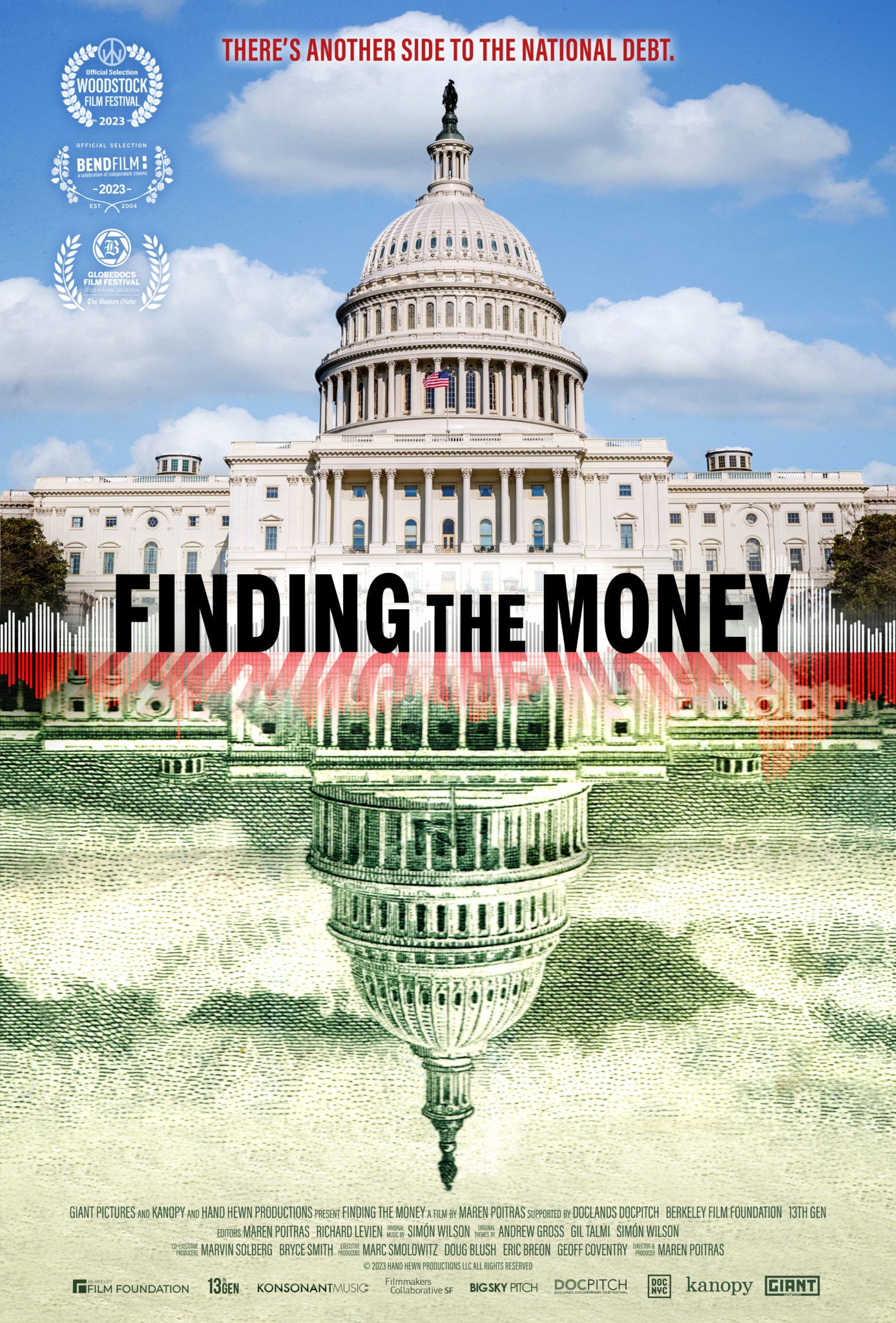
So as I got sucked into watching this documentary, it became clear this was not the case. Stephanie Kelton is part of a small group of American economists who are challenging global economic orthodoxy in a fairly convincing way.
A quick story from the olden days.
When I was a primary school kid we went on a school trip to the Royal Mint. This was in a massive old building near Tower Bridge in the City of London. We watched big machines noisily stamp out out coins, tens of thou=sands of them in huge buckets. It was amazing.
We watched massive printing machines produce huge sheets of uncut currency for both the UK and overseas countries.
We were allowed to try and lift £100 in old sixpences, which dates this trip as pre decimalisation in 1971. Yes, I’m old, don’t go on about it. The bag of sixpences was very heavy, I couldn’t lift it, Vincent Pickering could, I think I’ve mentioned him before in this series, he was the dangerous kid in the class.
But what I learned that day long ago is that the government prints money. They create money, if they create too much, we might suffer from inflation, if they create too little, we might go into a depression. But it doesn’t really exist in any concrete form.
All governments print money. It’s nothing new, Kings, tyrants, emperors and governments have always ‘issued currency.’ They literally create money so we can use it and then pay some of it back to them as taxes so they can do things like start wars, build prisons and okay, hospitals, schools canals, roads etcetera.
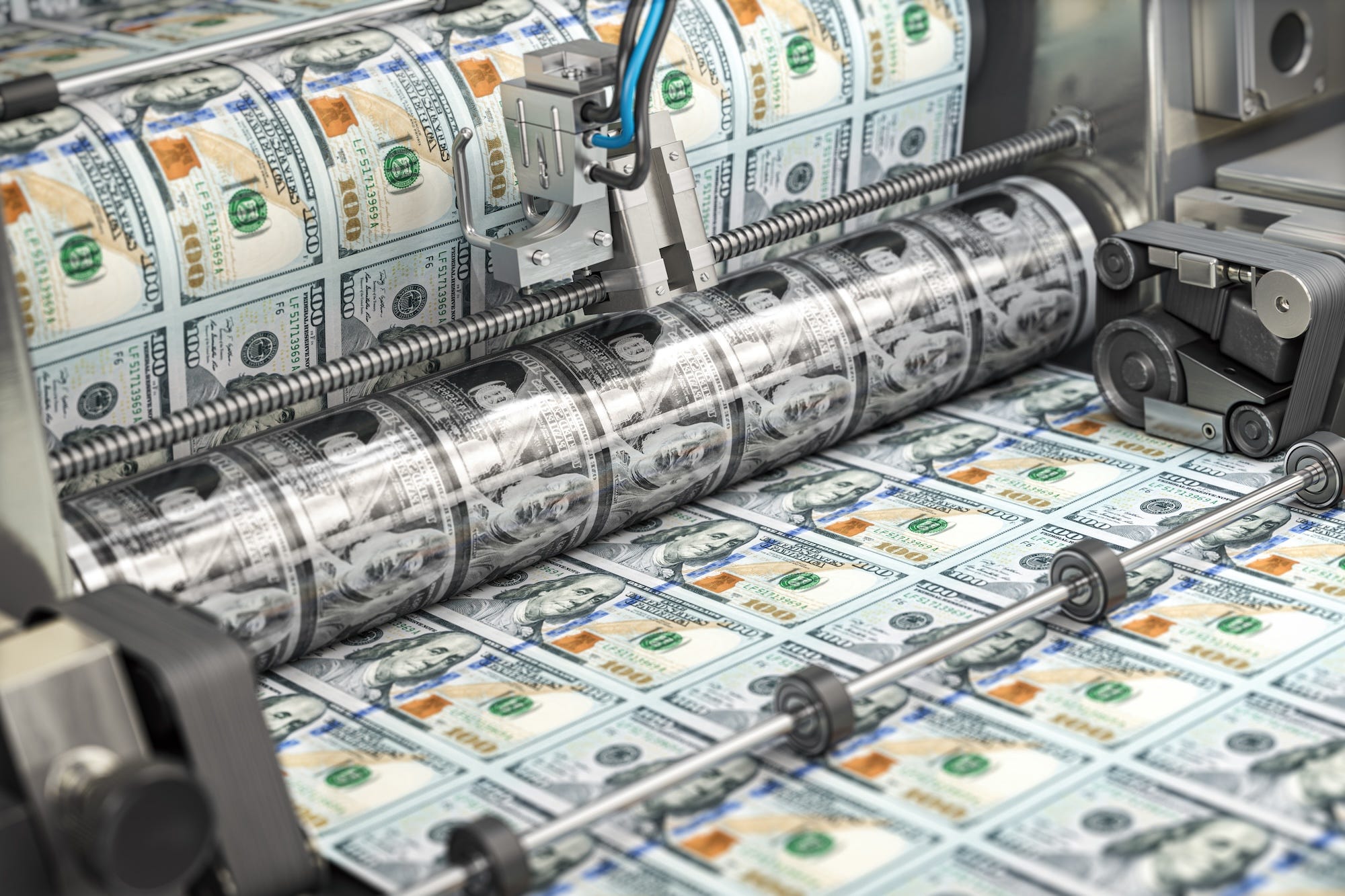
I had a vague grasp of this idea before I saw the documentary, but what these economists were presenting really does shake up economic thinking. And please believe me when I say I don’t know that I agree with their prognosis, but I’ll tell you one thing. It’s a lot more interesting, challenging and plausible than crypto.
Can I just have a side rant about crypto? Go on, let me. It’s brilliant for bent billionaires, con artists, drug and weapon dealers and general run of the mill criminals. It has no creative or developmental value and everyone who supports it is either a crook or a sad dupe.
I know that’s going to annoy some men, I don’t care. I’ll tell you what, you you are a woman and obsessed with crypto I’d love to hear your opinions. Up to now it’s always, ALWAYS been punchy aggressive men who are pumped and stoked about effing crypto.
There, got that off my chest.
Now, the reason I started this wander through my half baked opinions about economics is to do with endless growth. I’m happy to accept that economic growth has had advantages for people in the developed world.
However, because I’ve been alive for close to seven decades I know that after a growth spurt, there’s always a collapse, and then maybe 7 to 10 years later, another growth spurt. That seems to be the natural order of things.
One thing that has become very apparent in the last 25 to 30 years is when there’s economic growth, a small number of people become very rich, and most of the rest of us might be slightly better off.
When there’s a massive, global, economic downturn, a few people still get very rich and the rest of us suffer. What this has resulted in is literally a handful of people having most of the money that’s been printed by our governments, and the rest of us are scrabbling around in the dust.
I can’t help pondering that an economic system based on stability, low or zero ‘growth’ and a sustainable use and reuse of extracted raw materials might be a very good idea.
I have never been interested in people who ‘make money.’ No one other than governments make money, so what those people in their shiney offices in Paris, New York, Hong Kong, Shanghai, Singapore are really doing is arranging things to enable them to take as much money from all of us and make a big pile of it they say belongs to them.
They have made nothing, they have created nothing, they are, literally, the scum of human activity. They are the slime that floats to the top of the human experience, poisoning the pond. And yet, somehow, we now judge people not on what they have done, who they might have helped, but on how much of the money our government printed they have managed to stash. That, dear reader, is very sad.
But the main point the folks featured in the documentary made is that the endless repetition we’ve heard all our lives from politicians of every stripe and colour. National debt. We are always under pressure because of the huge debts our governments run up. National debt is the excuse used to cut services and lower wages and keep most people poor, we all know that. But these economists argue that this idea is based on a total falsehood.
If a government prints money, that money goes into the general economy. The government then says this is their national debt. But that money is in existence and working for us. They argue, with considerable evidence, that there is no such thing as national debt, only national savings.
That money our government printed circulates and produces goods and services that benefit all of us. And we then pay taxes and the government can spend that money as they see fit.
It’s worth reminding ourselves that governments aren’t some alien creature controlling us. We are part of the government, it’s how we organise vast numbers of people. A government is a very good thing, we need it or we will just live in perpetual gang warfare as we did for hundreds of miserable, painful and destructive generations.
So I will now endeavour to learn more about Modern Money Theory, it’s an idea that a lot of old economists who currently control the ideas in economics find at best preposterous, at worse downright dangerous. There are multiple critics and it’s hard not to agree, the old economic models we’ve all lived under makes sense . . . don’t they?
A bit like the old fossil fuel economy makes sense, as long as you utterly ignore the massive externalities and drawbacks.
Have you come across Prof Richard Murphy's blog / YouTube channels, he is also on about Modern Monetary Theory.
https://www.taxresearch.org.uk/Blog/
https://www.youtube.com/@RichardJMurphy
I came across Stephanie Kelton’s book The Deficit Myth couple of years ago and it’s a great primer for this topic. Even I could grasp the concepts to a basic level. It shows that all money management is a political decision.