Tesla Might Have Started It
But the batton has been passed on

As one or two of you reading this will know, keeping your brain active, stimulated and challenged is very beneficial to your long term mental health.
So for an old duffer like me to put a news report together is at the same time challenging, exciting, exhausting and occasionally really depressing.
But there really are dizzying amounts of new developments happening in the clean energy space around the world.
One example is the recent report from EMBER, the global energy think tank, about battery costs.
I know I’ve droned on about this for half a decade, but the shift is now so profound, it really is starting to make a difference.
EMBER state that for large scale grid batteries, the most recent levelled cost of storage has fallen to $65 per MegaWatt hour.
I will just repeat one more time. In 2010, the cost of producing one MegaWatt hour of battery cells would have been over a million dollars.
What this means in simple terms is that back in 2010, it was a pipe dream to present any kind of economically viable alternative to burning coal to boil water create steam to drive a turbine to spin a generator and produce electricity.
Using solar and batteries was just silly. Using batteries to power a car was a fantasy, the cars were absurdly expensive and had very limited viability.
In 2010.
In 2026, it is now economic suicide to build new coal plants or to spend money keeping existing ones struggling on. So it doesn’t really matter what any politician says and demands, coal burning is very 20th century and will continue to decline.
But these enormous reductions in battery costs, and the eye watering increases in manufacturing capacity obviously affect electric transport too.
I’ve just driven the Leapmotor TO3 from one end of Wales to the other, down a road with the least charging infrastructure in the UK.
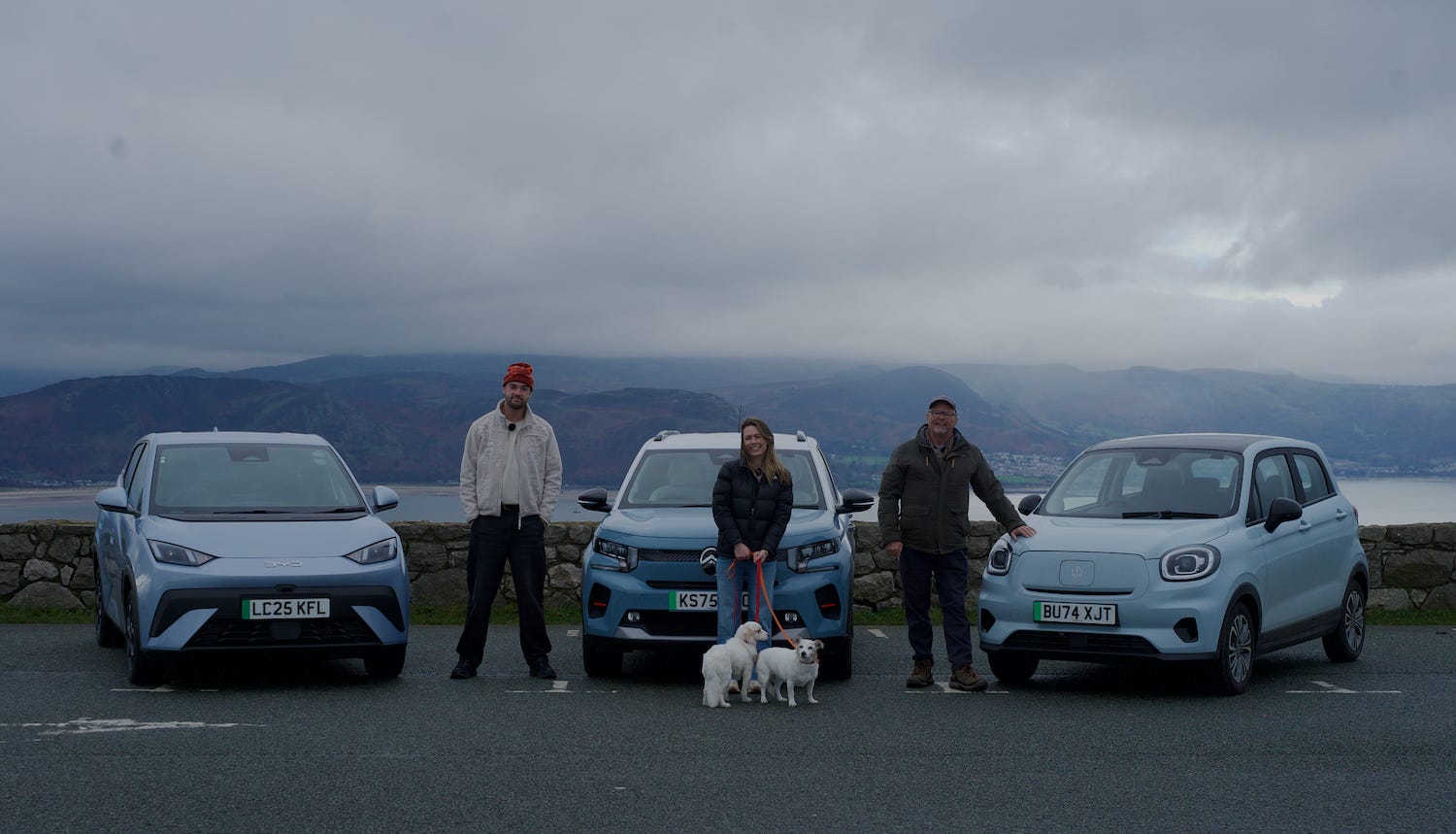
It was fine, the car is ridiculously comfortable for such a petite machine, it has a real world genuine 130 mile range, in mid winter, in heavy rain, going up and down hills.
It has a 36 kWh usable battery, and it costs £14,500 on the road.
In 2010 the battery alone would have cost $43,200 or around about £32,000.
Here’s the kicker of course. The car was built in China, the battery was made in China. What European or North American brands can compete with that? And they’ve recently managed to kick the can down the road, wangle petrol hybrids into the mix for the next 10 years and lovely Stellantis, bless them, and re-introducing new diesels. In 2026.
I’ll just go and bang my head against a wall for light relief.
Oh, and just in case anyone wants to kick off, the LFP battery in the Leapmotor TO3 contains zero nickel or cobalt, it won’t ever catch fire and it will last longer than the car.
But I realise you wonderful Patreon’s will know all this, I think it is the use of these same batteries in energy storage that’s possibly less well known.
In 2025 we passed 500 Gigawatt hours total grid battery capacity, and that doesn’t included the massive roll out of individual domestic batteries that happened in Australia in the last 7 months.
That single scheme has added 2 Gigawatt hours to the global total, and these batteries are all capable of dispatching their stored electricity into the grid as well as storing electricity coming from solar panels of the roof of the house.
I have covered numerous stories about the enormous rollout of solar and battery projects around the world.
I saw a very large one in Australia last month, that episode will be released soon, the New England Solar project in New South Wales has a battery installation the size of a large housing estate, and just short of 1 million solar panels covering a sheep farm.
What! Desecrating farm land, destroying the rural economy, it’s a disgrace!
Yes, close to one million solar panels, and 6,500 sheep living in mutually beneficial harmony. The sheep eat the grass, the panels provide some much needed shade from the brutal Australian sun.
But since visiting that solar farm, I have heard of solar arrays being built now with 5 times the generating capacity and battery storage.
This technology is still in its infancy, it’s really only just emerging and is still only making a small difference to how we generate electricity around the world, but it’s not going to stop, and it will happen faster in Africa and Asia than it has in Europe or North America.
And even with that big techno optimism, we are still in deep doo doo as regards the impact we’re making with burning fossil fuels. All this stuff is happening about 20 years too late, so I like to keep a lid on my optimism with a quick reflection on how very little things have changed.
We still derive the vast majority of our energy from burning fossil fuels, and obviously the companies and politicians who benefit from that bounty are very motivated to keep that going.
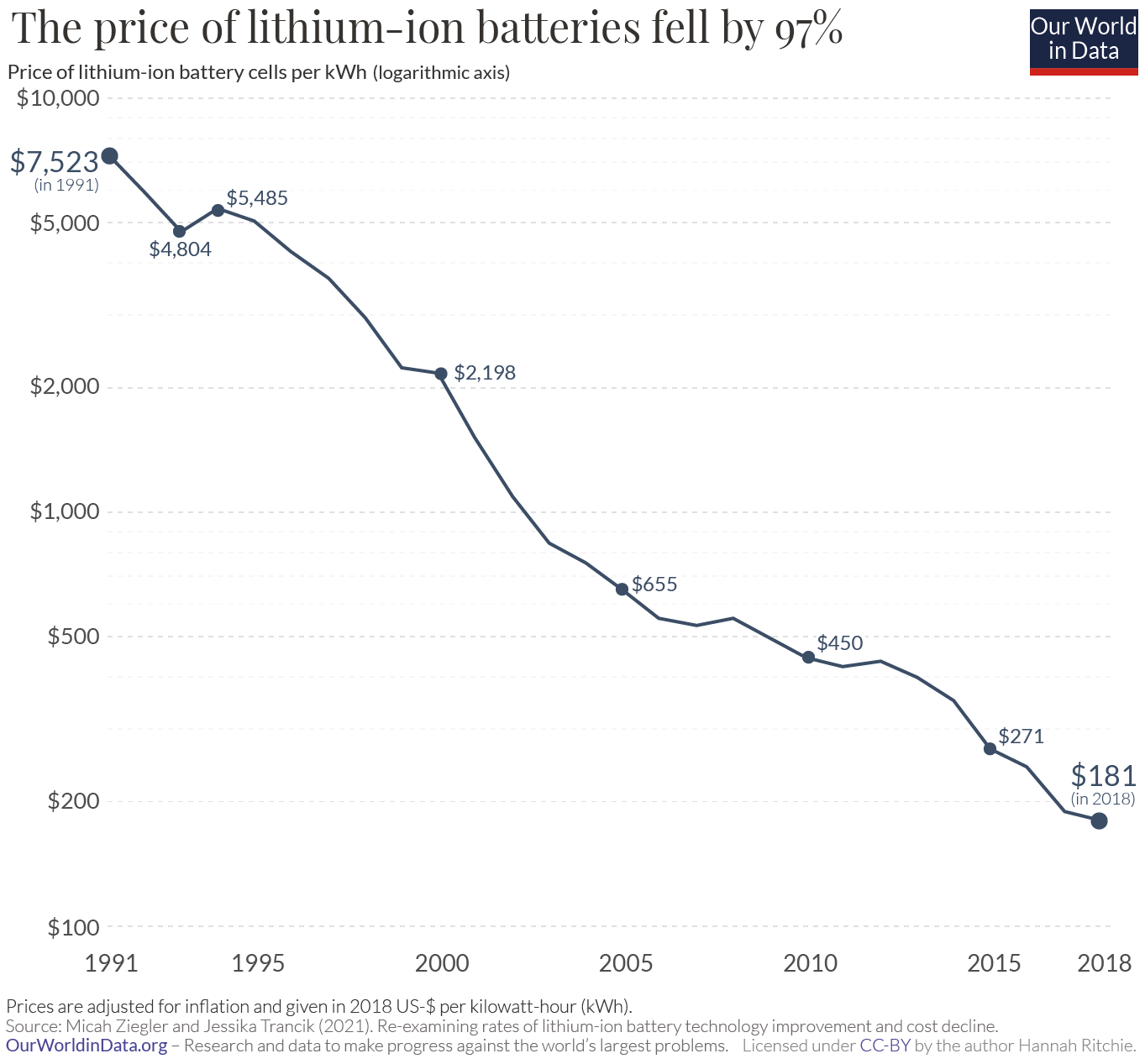
The best graph I could find that illustrates the drop in battery prices since 1990. This is from one of my favourite sources of energy intelligence, Our World in Data
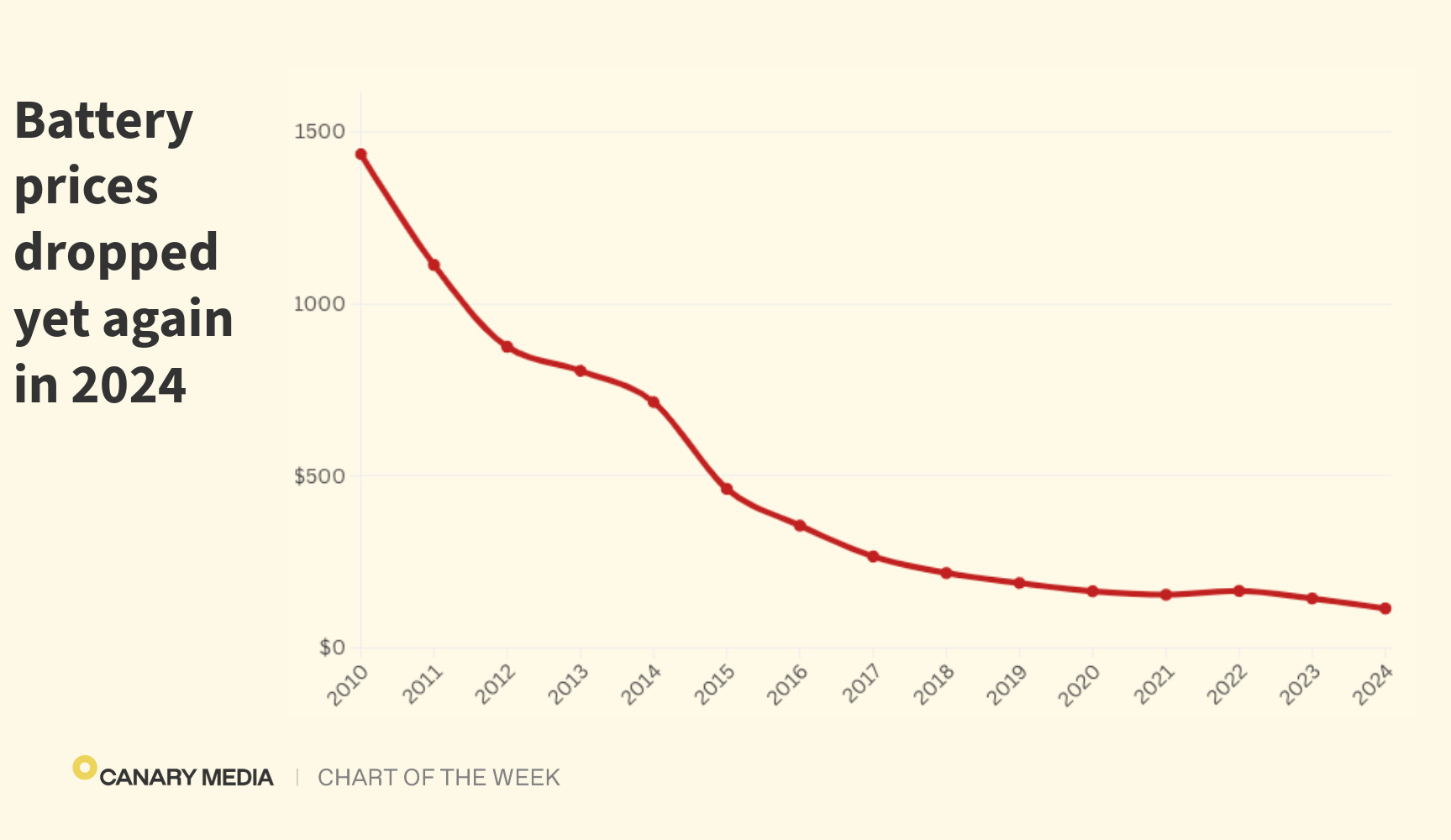
And this more recent one from Canary Media
I couldn't really have imagined a few years ago that I'd be powering my house with a mix of solar and battery with the batteries charged overnight at cheap rates. And, I haven't visited a petrol station for a year.
Great stuff as always, thank you Robert. It's a shame that most of us reading these rants are probably all like minded - we need to get more naysayers to hear all these things. But as they say you can lead a horse to water but... we can only keep trying to get the message out there against all the fossil fuel lobbying disinformation